Design— Feature
The Typeface That Runs the Ferry System
A harbor authority commissioned a typeface for its signs in 1974 and never replaced it. Fifty-two years later it is the most-read piece of design almost nobody has heard of.
Cities— Report
Published timetables and recorded vehicle positions describe two different transit systems. We compared them for one city, for one month.
Every transit agency publishes two things: a timetable, which is a promise, and — increasingly — a live vehicle position feed, which is a record. Very few agencies compare them systematically, and almost none publish the comparison.
Veyra collected one month of vehicle positions from a mid-sized European network alongside its published schedule, and reconstructed what a passenger at each stop would actually have experienced.
By the agency’s own reliability metric — the share of departures within five minutes of schedule at designated timing points — the network performed at 89 percent across the month. That is a respectable figure and the agency has no reason to be embarrassed by it.
The metric measures timing points. Timing points are, by design, placed where buses can recover: termini, interchanges, long straight sections. A bus that runs late through a dense residential segment and then sits for three minutes at the next timing point is recorded as on time.
The network is measured where it is easiest to be punctual, which is not where anybody is standing.
Recomputing reliability at every stop rather than at timing points changes the picture in a specific and consistent direction.
None of this is hidden. The agency’s own planners we spoke to were aware of the discrepancy and described it, without prompting, in almost the terms above. The metric is not a deception; it is an inherited convention from an era when the only way to observe a bus was to station a person at a timing point with a clipboard.
The agency has since begun publishing stop-level reliability for a pilot group of forty stops. It is, one planner noted with some resignation, the first metric they have ever published that they expect to get worse before it gets better.
Correspondent, Cities
Priya Raghunathan covers the built environment across South and Southeast Asia, with a persistent interest in the unglamorous machinery of density: drainage, shade, cooling, and the maintenance budgets nobody campaigns on. Before Veyra, Raghunathan spent five years as a municipal planning analyst, an experience that produced both the reporting instincts and the impatience.
Senior Writer, Systems
Juno Halvorsen writes about the technical systems that make decisions before anyone notices a decision was available — routing tables, scheduling software, default settings. Halvorsen came to journalism from six years as a network engineer, which shows in the reporting: the questions are specific, and the answers usually arrive as documentation. Files from Lisbon, and from whichever data center will grant access.
Keep reading
A harbor authority commissioned a typeface for its signs in 1974 and never replaced it. Fifty-two years later it is the most-read piece of design almost nobody has heard of.
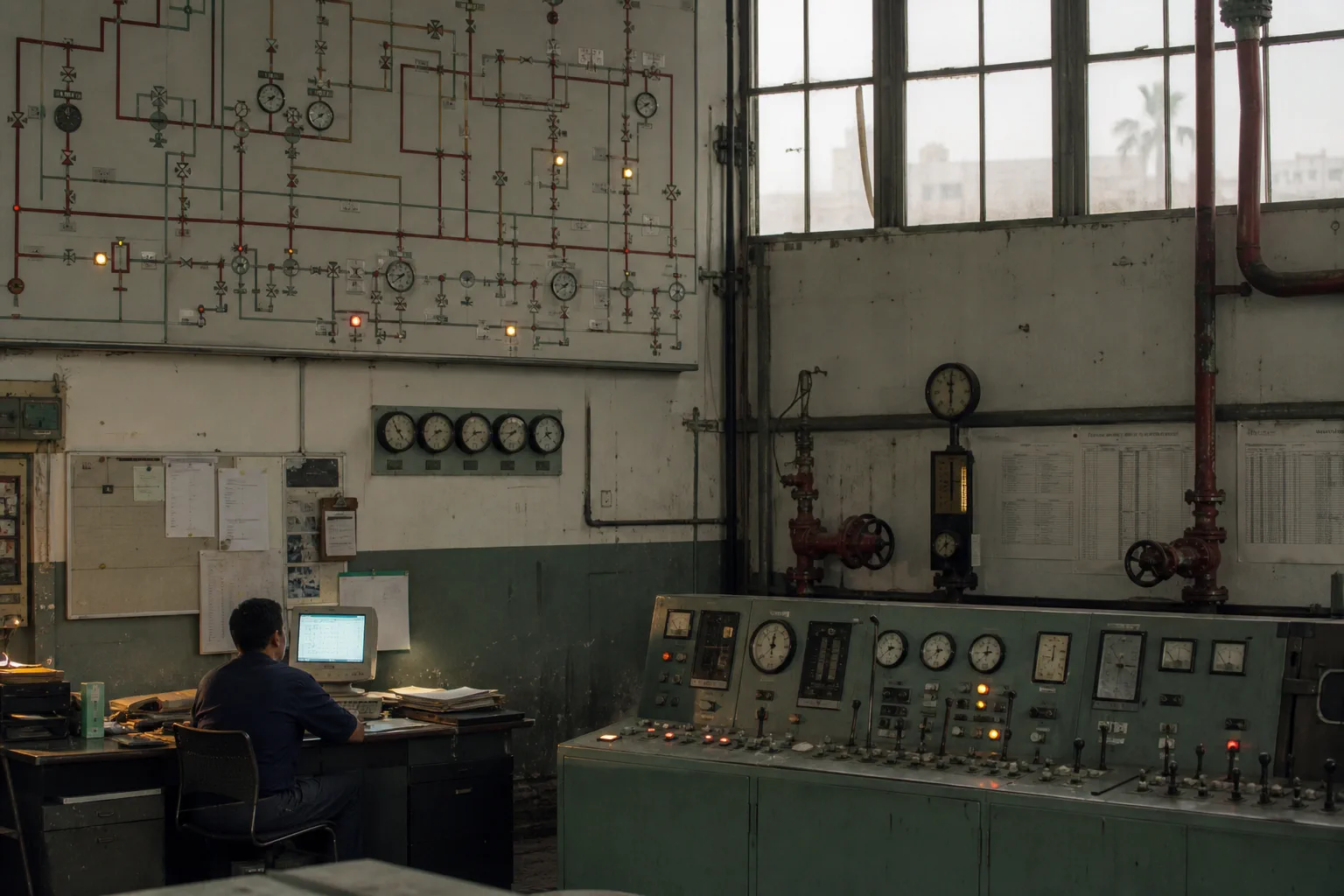
When a mid-sized water utility replaced its paper rota with scheduling software, an unremarkable configuration choice quietly redistributed morning pressure across an entire city.
International time is maintained by a loose federation of laboratories with no enforcement power and shrinking budgets. It works because everyone involved keeps deciding it should.
The Dispatch
Not a digest. One piece from the archive or the week ahead, with a note from the editor on why it was worth the reporting time.