Technology— Feature
The Scheduler That Decides Who Gets Water
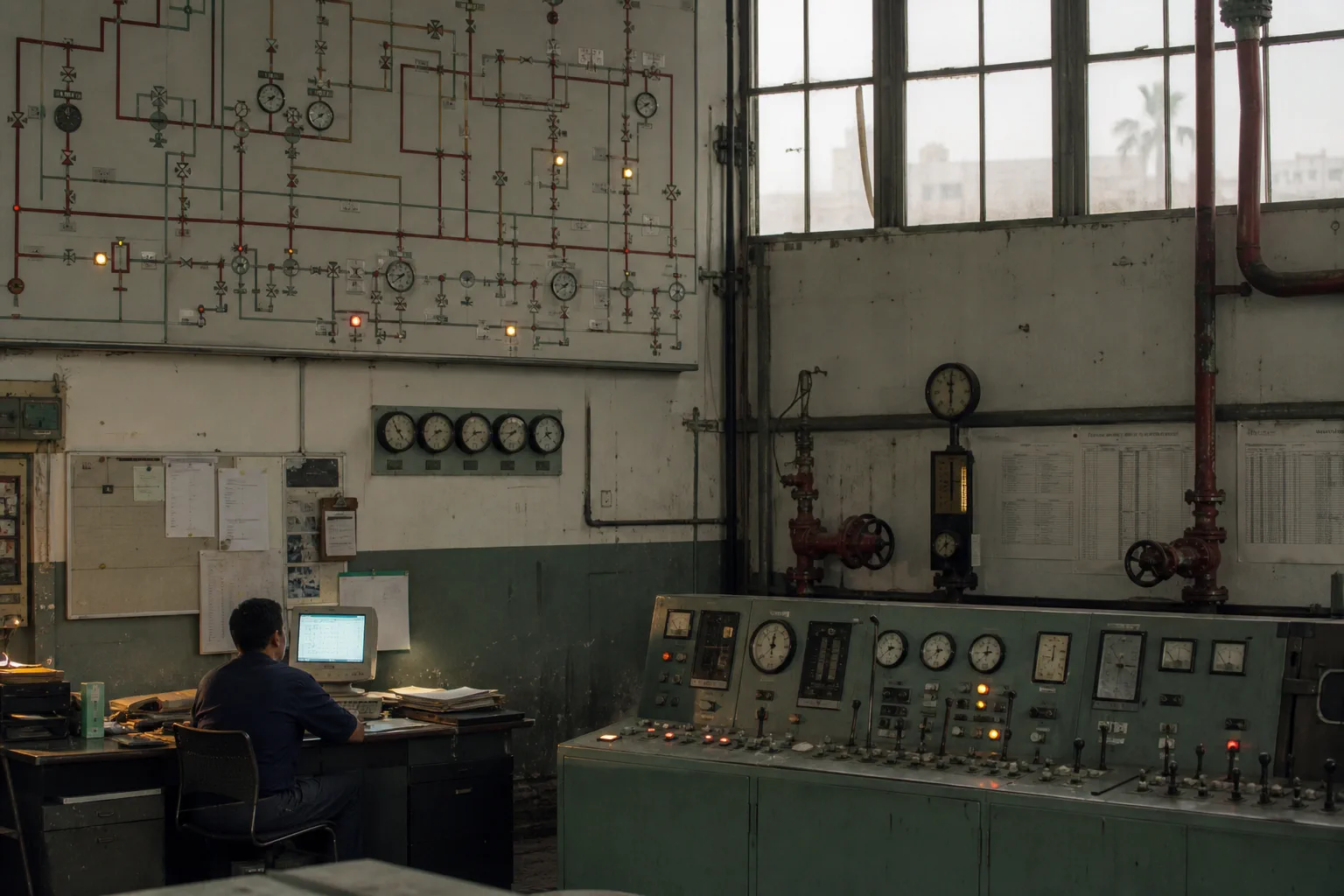
When a mid-sized water utility replaced its paper rota with scheduling software, an unremarkable configuration choice quietly redistributed morning pressure across an entire city.
Closed series
A closed series, published across the first half of 2026, on decisions made once and then inherited forever — a scheduling weight, a timing average, a letterform, a metric that measures the wrong thing. The reporting question in each case was the same: who chose this, and does anyone still know why?
When a mid-sized water utility replaced its paper rota with scheduling software, an unremarkable configuration choice quietly redistributed morning pressure across an entire city.
A harbor authority commissioned a typeface for its signs in 1974 and never replaced it. Fifty-two years later it is the most-read piece of design almost nobody has heard of.
A month of vehicle position data set against the published timetable reveals a bus network that is reliable on paper and structurally late where it matters most.
International time is maintained by a loose federation of laboratories with no enforcement power and shrinking budgets. It works because everyone involved keeps deciding it should.
Most people never change a default. That makes the default the actual policy — and the person who chose it the actual policymaker.
The Dispatch
Not a digest. One piece from the archive or the week ahead, with a note from the editor on why it was worth the reporting time.