Technology— Feature
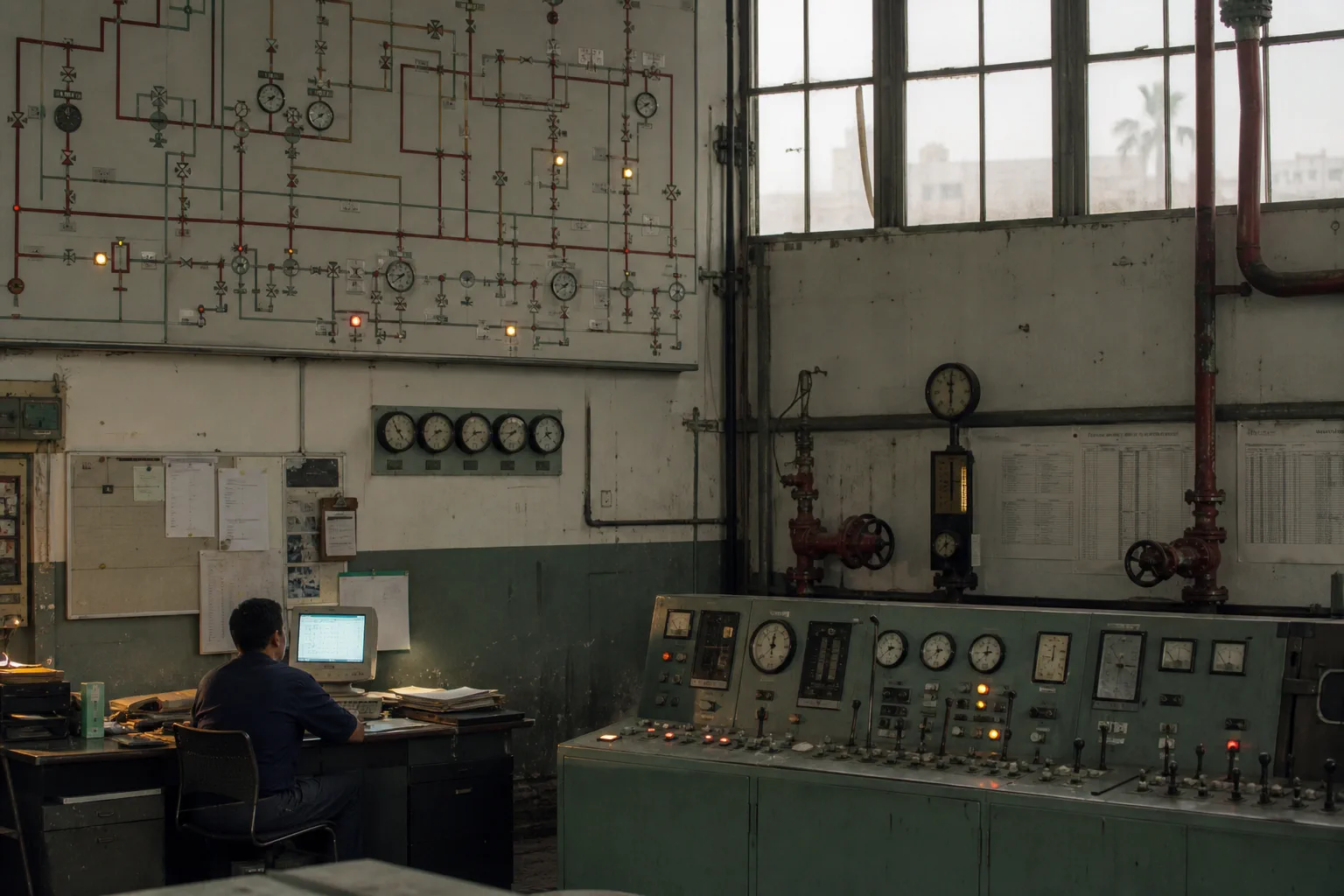
The Scheduler That Decides Who Gets Water
When a mid-sized water utility replaced its paper rota with scheduling software, an unremarkable configuration choice quietly redistributed morning pressure across an entire city.
Technology— Essay
The setting nobody changes is the setting that governs. An essay on the most powerful and least discussed form of design authority.
Here is a claim that sounds small and is not: for any given setting in any given system, the overwhelming majority of users will accept whatever value it arrives with, forever.
This is not laziness. It is a rational allocation of attention. A person confronted with forty settings, none of which they understand the downstream consequences of, is making a sensible decision by trusting that the arrangement in front of them was assembled by someone who thought about it.
The uncomfortable part is what that trust is placed in. Defaults are frequently set by whoever was implementing the feature on the afternoon it shipped, using a value that seemed reasonable, occasionally chosen because it made a demonstration look better.
A default is a decision made once, by one person, on behalf of everyone, permanently.
It helps to distinguish them, because they fail differently.
The third category is the largest in any system older than about four years, and the least examined. We have both worked on codebases where the answer to “why is this thirty seconds?” was a commit message consisting of a single word.
There is a simple discipline that almost nobody practices: write down, next to each default, who it is optimized for and what happens to someone who never touches it. Not the value. The reasoning.
In our experience the exercise takes an afternoon and changes between one and three settings, which does not sound like much until you consider that those settings will govern the behavior of everyone who ever uses the product.
The counterargument is that this makes shipping slower. It does. It also makes the resulting decision legible to the next person, which is the difference between a system that can be maintained and a system that can only be preserved.
Design has spent two decades getting better at what happens when someone acts. It has spent much less time on what happens when they do not — which is, statistically, almost always.
Senior Writer, Systems
Juno Halvorsen writes about the technical systems that make decisions before anyone notices a decision was available — routing tables, scheduling software, default settings. Halvorsen came to journalism from six years as a network engineer, which shows in the reporting: the questions are specific, and the answers usually arrive as documentation. Files from Lisbon, and from whichever data center will grant access.
Design Editor
Santiago Vela edits Veyra’s design section and designed the magazine itself, including the cover plate system used across the archive. Vela trained as an industrial designer and worked for eight years on transit wayfinding before moving to editing, which explains a recurring editorial position: if the public has to be taught how to use something, the something is at fault.
Keep reading
When a mid-sized water utility replaced its paper rota with scheduling software, an unremarkable configuration choice quietly redistributed morning pressure across an entire city.
International time is maintained by a loose federation of laboratories with no enforcement power and shrinking budgets. It works because everyone involved keeps deciding it should.
A harbor authority commissioned a typeface for its signs in 1974 and never replaced it. Fifty-two years later it is the most-read piece of design almost nobody has heard of.
The Dispatch
Not a digest. One piece from the archive or the week ahead, with a note from the editor on why it was worth the reporting time.