Culture— Interview
Kwesi Anoff Builds Drums That Outlive Their Owners
An interview with a drum maker whose instruments are built to last a century — and who turns away most of the people who want to buy one.
Culture— Feature
For thirty-one years, a two-room studio above a hardware shop gave Portuguese voices to the world’s cartoons. Its closing is a small story about how a language gets maintained.
Lisbon —
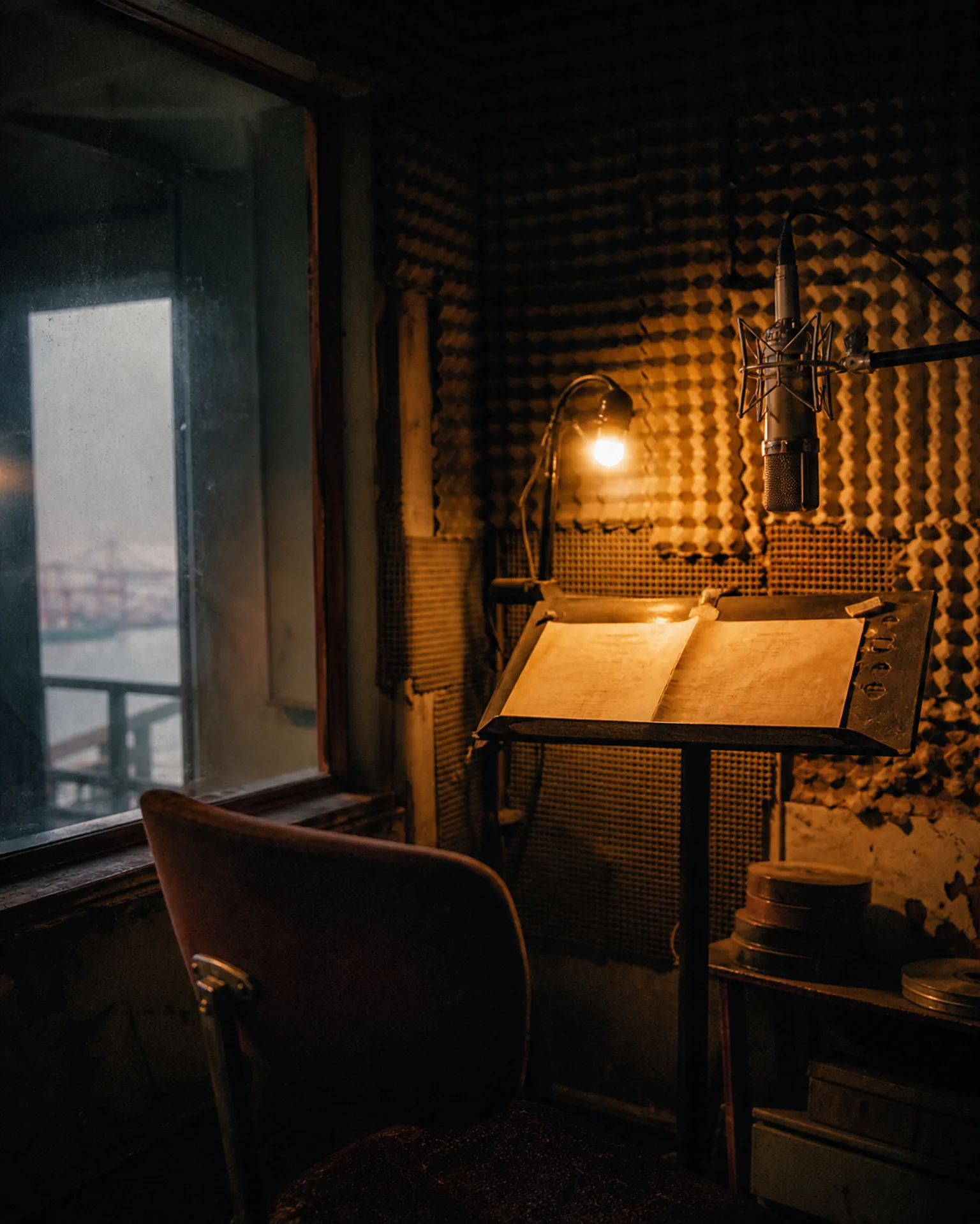
The booth is smaller than an elevator. Two people can stand in it if one of them turns sideways, and for most of the last three decades two people usually did, because Estúdio Farol paid by the session and sessions ran faster when the voices could see each other.
On a Tuesday in June, Célia Nogueira stood in it alone. She is sixty-eight. She has voiced, by her own count, four hundred and ten characters, most of them animals, several of them the same animal in different decades. She was recording a farewell: a short message the studio’s owner wanted for the archive, addressed to nobody in particular.
“I kept saying it wrong,” she said afterward, on the landing, where the air was moving. “Because there is no way to say goodbye to a room.”
Dubbing in Portugal has always occupied an awkward position. Portuguese audiences have historically preferred subtitles for live-action film, which meant the dubbing industry grew up almost entirely around children’s programming — cartoons, educational series, the occasional nature documentary narrated in a register somewhere between a schoolteacher and a lighthouse.
Estúdio Farol opened in 1995 in two rooms above a hardware shop on Rua Fria, in a building whose stairwell still smells faintly of turpentine. Its founder, Amílcar Bento, had been a radio engineer and bought the equipment secondhand from a station that was closing. He hired actors from a nearby theater company because they were available in the afternoons and because, he told me, “stage actors already know how to say a line to a person who is not there.”
What the studio produced was not, strictly, translation. Translation happened elsewhere, on a contract basis, and arrived as a script that rarely fit. A line that takes four seconds in English takes six in Portuguese, and cartoon mouths do not wait. So the actors rewrote as they recorded, out loud, in the booth, compressing and inventing until the sense survived inside the available time.
The mouth moves for four seconds. You have four seconds. Everything you know about the language has to fit inside them.
Nogueira estimates she has invented several hundred phrases this way — small colloquial constructions built to fill a gap. At least three, she says, have escaped into general use among Portuguese adults now in their thirties, who heard them at seven and have no idea they were manufactured on Rua Fria on a deadline.
Bento’s ledgers, which he showed me without much ceremony, tell a straightforward story. Through the 2000s, the studio ran between forty and sixty session days a month. By 2019 that had fallen to twenty-two. By last year it was nine.
The causes are not mysterious and not, mostly, technological. Commissioning consolidated. Distributors that once contracted regional studios directly began routing localization through a small number of international vendors that bid across dozens of languages at once. Rates were quoted per finished minute rather than per session day, which suited operations with large rosters and suited a two-room studio not at all.
Bento is careful not to describe this as anyone’s fault. “Nobody decided to end it,” he said. “A thousand people made reasonable decisions and the result was that this room is empty.”
It would be easy to make this an elegy, and easy to overstate it. Portuguese is not endangered. There are more Portuguese speakers now than at any point in history, and children’s programming still arrives dubbed, produced somewhere else, competently.
But the studios that did this work were, incidentally, one of the few places where a national vernacular was being actively maintained by people paid to be careful about it — where somebody argued for twenty minutes about whether a nine-year-old in Braga would actually say a particular word. That argument had an address. Now it has a workflow.
The equipment is going to a media conservation program at a polytechnic in Coimbra, which has agreed to take the archive as well. Digitizing it will take four years, assuming the funding renews. The hardware shop downstairs is expanding into the space.
Nogueira has two more sessions booked this year, both remote, recorded from a converted wardrobe in her apartment. “It is a good wardrobe,” she said. “The acoustics are honestly better.” She was quiet for a moment. “You just can’t see anyone.”
Culture Editor
Marguerite Okonkwo commissions and edits Veyra’s culture coverage, and writes a monthly essay on inheritance — of recipes, of grudges, of neighborhoods. Okonkwo spent seven years as a book critic before deciding that criticism was more useful when it left the desk, a conviction that now sends the section’s writers to rehearsal rooms, test kitchens, and municipal archives.
Staff Photographer
Teodor Brandt shoots most of Veyra’s photo essays and roughly half its features. The working method is slow and repetitive: return to the same location across a season, on film, until the place stops performing. Brandt’s series on Atlantic port labor ran across four issues and remains the magazine’s most requested archive piece.
Keep reading
An interview with a drum maker whose instruments are built to last a century — and who turns away most of the people who want to buy one.
Eighty weddings a year, four hours each, and no two crowds alike. What a working covers band understands about an audience that no recommendation system has managed to learn.
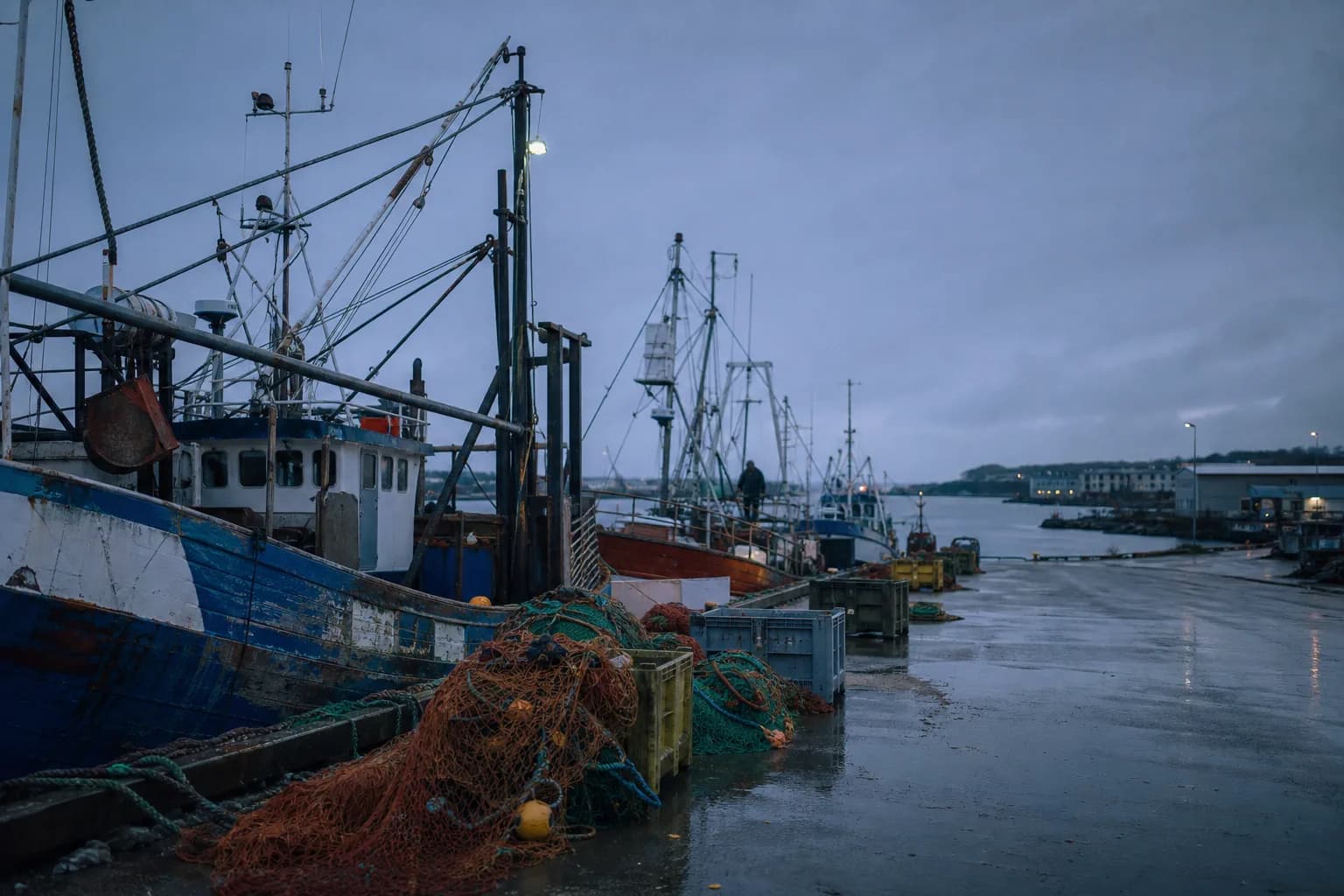
Fishing quotas are set annually in a room most fishers will never enter. Veyra sat outside one for eleven hours and spoke to the people on both sides of the door.
The Dispatch
Not a digest. One piece from the archive or the week ahead, with a note from the editor on why it was worth the reporting time.