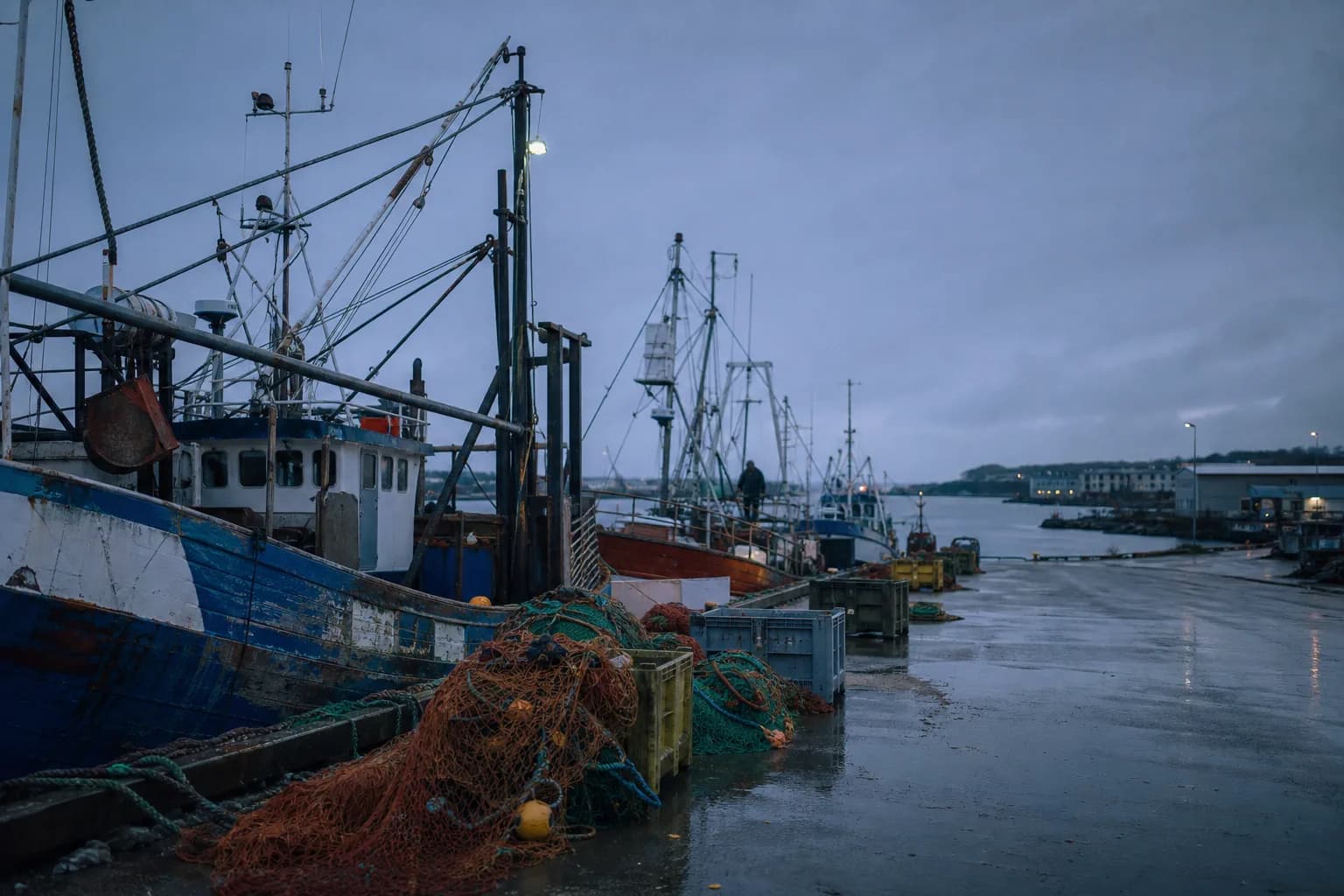
Environment— Feature
The Quota Meeting
Fishing quotas are set annually in a room most fishers will never enter. Veyra sat outside one for eleven hours and spoke to the people on both sides of the door.
Environment— Report
Coastal aquifers are turning brackish faster than the monitoring networks designed to watch them. A report from three well fields on two continents.
The moment a coastal aquifer turns is not dramatic. A farmer notices that a crop is doing slightly worse in one corner of a field, two seasons running. A municipal operator sees a conductivity reading drift upward by an amount within normal variation. Nothing happens. Then, usually four to six years later, a well is abandoned.
Veyra examined monitoring records from three coastal well fields — two in Europe, one in South Asia — chosen because each publishes enough data to reconstruct what was known and when.
Saltwater intrusion happens in a wedge. Denser seawater pushes inland along the bottom of an aquifer while fresher water sits above it. The interface moves horizontally, at depth, often tens of meters below the level at which most production wells draw.
Monitoring, in all three fields, was overwhelmingly concentrated at production depth, because monitoring was originally designed to protect water quality at the tap rather than to observe the aquifer’s structure.
We were measuring the water we drink, which tells you the problem has already arrived.
Intrusion is often described as irreversible. That is too strong and, in the view of every hydrogeologist we interviewed, unhelpful.
The wedge retreats if the freshwater head recovers, which happens when abstraction falls or recharge rises. What does not reverse quickly is the aquifer’s chemistry: salt adsorbed onto clay layers releases slowly, sometimes for decades, so water quality lags the physical retreat by a long margin.
This distinction matters operationally. A utility that reduces abstraction and sees no immediate quality improvement may conclude the intervention failed, when the wedge is in fact retreating and the chemistry has not caught up.
In the South Asian field, a grower cooperative has begun funding its own deep monitoring, having concluded that waiting for the utility’s capital cycle was not a strategy. Three wells were drilled last year. The cooperative’s chair described the reasoning simply: the cost of knowing was less than the cost of one bad season.
Environment Correspondent
Hanna Lindqvist reports on the North Atlantic and Baltic — fishing quotas, port infrastructure, offshore energy, and the towns whose entire employment picture depends on decisions made three jurisdictions away. Lindqvist has filed from every commercial harbor on the Swedish west coast and can identify most of them by the sound of the loading gear.
Correspondent, Cities
Priya Raghunathan covers the built environment across South and Southeast Asia, with a persistent interest in the unglamorous machinery of density: drainage, shade, cooling, and the maintenance budgets nobody campaigns on. Before Veyra, Raghunathan spent five years as a municipal planning analyst, an experience that produced both the reporting instincts and the impatience.
Keep reading
Fishing quotas are set annually in a room most fishers will never enter. Veyra sat outside one for eleven hours and spoke to the people on both sides of the door.
Four months at a working harbor, photographed at shift changes. A study of labor, weather, and the particular light of a northern winter.
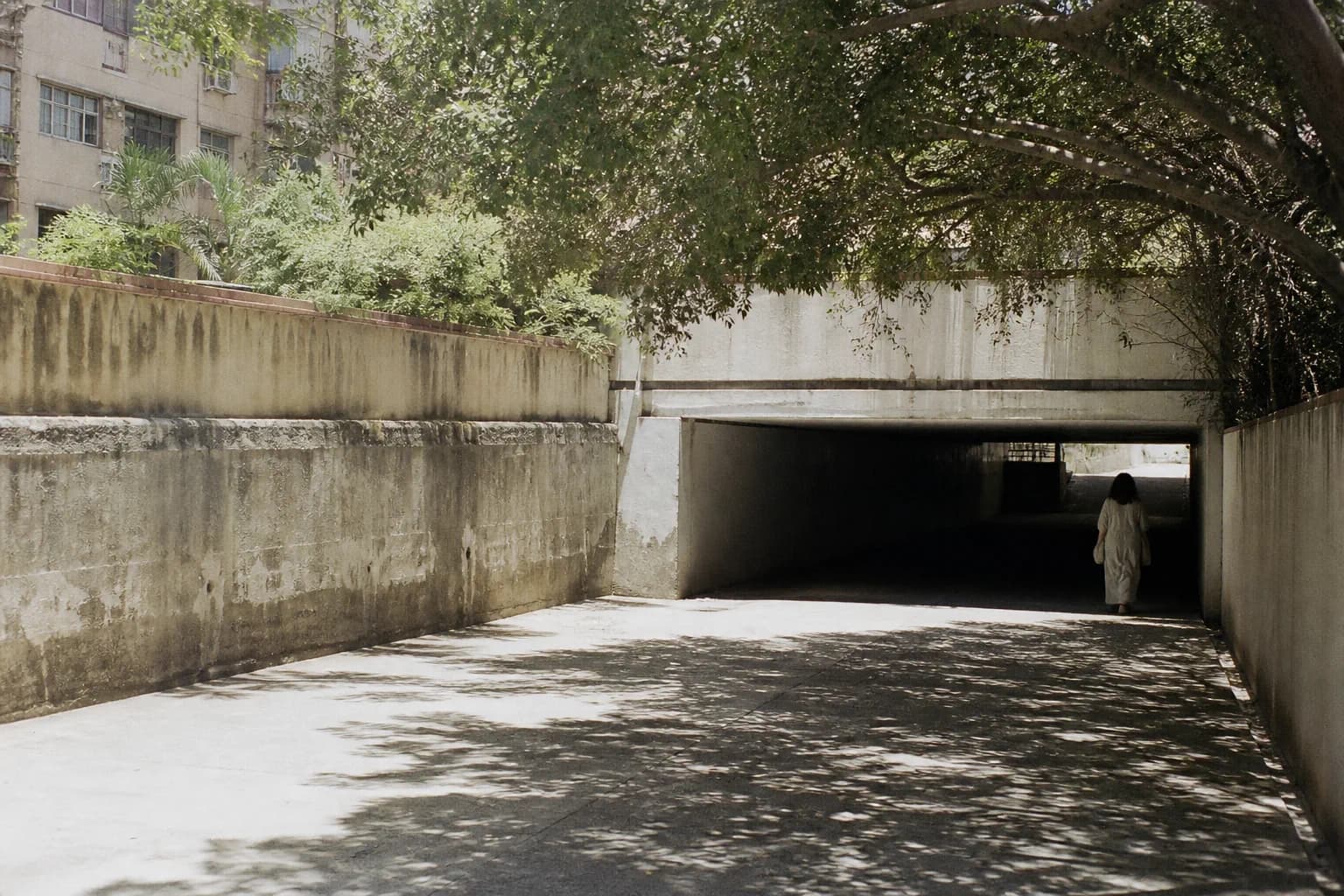
Shade has never appeared on a municipal asset register. A handful of cities are now mapping it street by street, and discovering how unevenly it is distributed.
The Dispatch
Not a digest. One piece from the archive or the week ahead, with a note from the editor on why it was worth the reporting time.